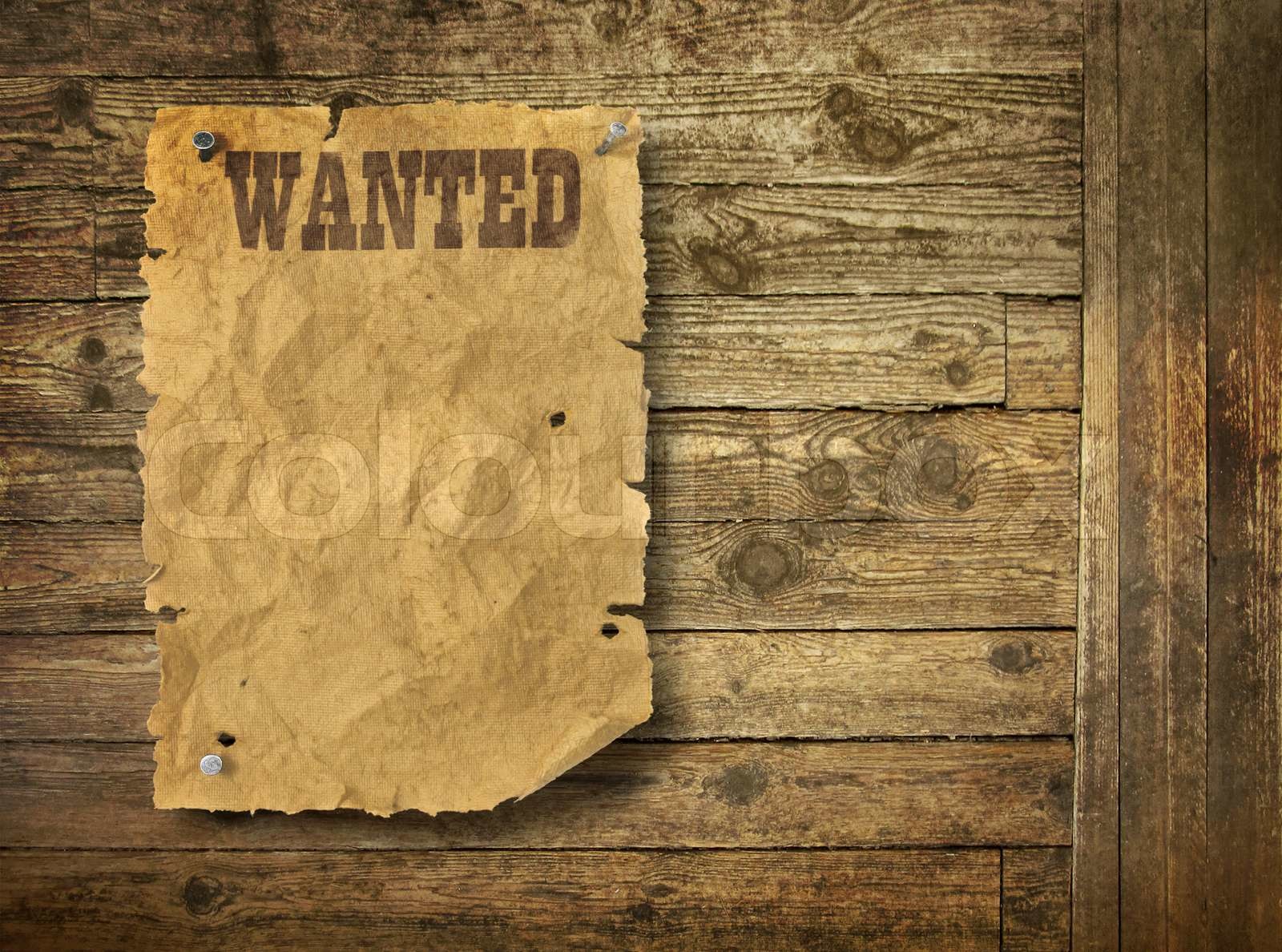
You’ve seen them a thousand times. A dusty piece of parchment tacked to a weathered saloon door, featuring a grainy charcoal sketch of a bearded outlaw and a bold "Dead or Alive" headline. It’s the quintessential image of the American frontier. But honestly, the wild west wanted poster you see in Hollywood movies is almost entirely a fabrication of the 20th century. If you went back to 1880s Tombstone or Dodge City, you might not even recognize a real one.
Most people assume these posters were everywhere. They weren't. In reality, the "wanted" notice was a logistical nightmare for local sheriffs. Printing was expensive. Paper was scarce. Distribution was slow.
The Paper Trail of the Frontier
The truth is, most outlaws were caught because of word of mouth or telegrams, not because a bounty hunter saw a poster in a post office. When a wild west wanted poster actually did get printed, it looked more like a boring legal notice than a piece of art.
Think about the Billy the Kid notice from 1880. It didn't have a giant photo. Most didn't. Photography was a luxury, and most outlaws weren't exactly lining up at the local studio to get a headshot before they robbed a train. Usually, you'd just see a wall of cramped text describing "a man of medium height, light hair, and a nervous disposition." That's not exactly easy to spot in a crowded bar.
Why "Dead or Alive" Was Actually Rare
We love the "Dead or Alive" trope. It suggests a lawless land where anyone could be an executioner. But legally, it was a mess. Authorities generally wanted suspects brought in for trial. If a bounty hunter just rode in with a corpse, the local judge had to verify it was actually the right guy, which was surprisingly hard to do before fingerprints or DNA.
Take Jesse James, for example. When Governor Thomas T. Crittenden issued the proclamation for his capture in 1881, it offered $5,000 for his arrest. It was a massive sum. But the document itself? It was a dense, text-heavy decree published in newspapers. It wasn't a flyer. It was a legal announcement.
How the Imagery Changed Over Time
The "classic" look—the slab-serif fonts, the yellowed paper, the rough edges—that’s mostly the work of 1950s set designers. They needed something that looked cool on a black-and-white TV screen.
Authentic notices from the Pinkerton National Detective Agency were much more professional. The Pinkertons were essentially the first to use "mugshots" effectively. They’d compile a "Rogues' Gallery." If they managed to get a photo of a criminal—often after a previous arrest—they would circulate it to their various offices.
- They used high-quality typesetting.
- They included detailed physical scars or "marks."
- They focused on "specific" crimes rather than general lawlessness.
Actually, the Pinkerton flyers are the closest thing to what we imagine today, but even they were usually sent via mail in envelopes, not posted on every tree in the county.
The Role of the Telegraph
While the wild west wanted poster gets all the glory, the telegraph was the real outlaw killer. Once a robbery happened, the station agent would tap out the details to the next town. The "wanted" notice became a digital signal before it ever became a physical piece of paper. This is how the "Wild Bunch" or the Dalton Gang often found themselves being met by a posse at the next stop. The paper was just for the record books.
Identifying an Authentic Wanted Notice
If you’re ever at an estate sale or an antique shop and you see a wild west wanted poster that looks too perfect, it’s probably a fake. Authentic 19th-century paper was often made of linen or rag, not the wood-pulp stuff we use today. It doesn't just turn bright orange; it gets brittle.
Also, look at the font. Real printers in the 1800s used whatever wood type they had in the shop. They didn't have "Western" themed fonts because to them, it was just "now." If you see a font like "Barnum" or "Playbill" on a poster dated 1870, it’s a modern reproduction. Those fonts were designed decades later to mimic the era.
The Famous Jesse James Poster
The most "faked" poster in history is the Jesse James $25,000 reward notice. You can buy them at any gift shop in Missouri. The real ones from that era were usually 8x10 inches or smaller. They weren't posters; they were "handbills." They were meant to be held in your hand and read, not viewed from across the street.
The language was also very formal. You wouldn't see "Reward for this No-Good Scoundrel." You’d see: "The Governor of the State of Missouri hereby offers a reward..." It was bureaucratic. Boring, even.
What This Means for History Buffs
The romanticized version of the wild west wanted poster tells us more about our love for the myth than the reality of the frontier. We want the West to be a place of clear-cut villains and heroic lawmen, where a single piece of paper could change a man's fate.
But the reality was grittier. It was about clerks, long-form legal descriptions, and the slow creep of technology like the telegraph and the camera.
Actionable Insights for Collectors and Historians
- Check the Paper: Authentic 19th-century documents are usually thin and may show "foxing" (small brown age spots) rather than a uniform "tea-stained" look.
- Verify the Printer: Real handbills often had a small "printer's mark" or the name of the local newspaper office that did the job. Cross-reference the printer name with historical records of that town.
- Analyze the Ink: Real 19th-century ink was often iron gall ink. It bites into the paper and can turn a rusty brown over time, unlike modern black toner which sits on top.
- Study the Wording: Look for specific legal jargon. If the phrasing sounds like a movie script ("Reckless and Dangerous!"), it's likely a decorative piece from the mid-20th century.
- Visit Proven Archives: If you want to see the real deal, skip the tourist shops and look at the digital archives of the Library of Congress or the National Archives. They hold the actual circulars used by the U.S. Marshals.