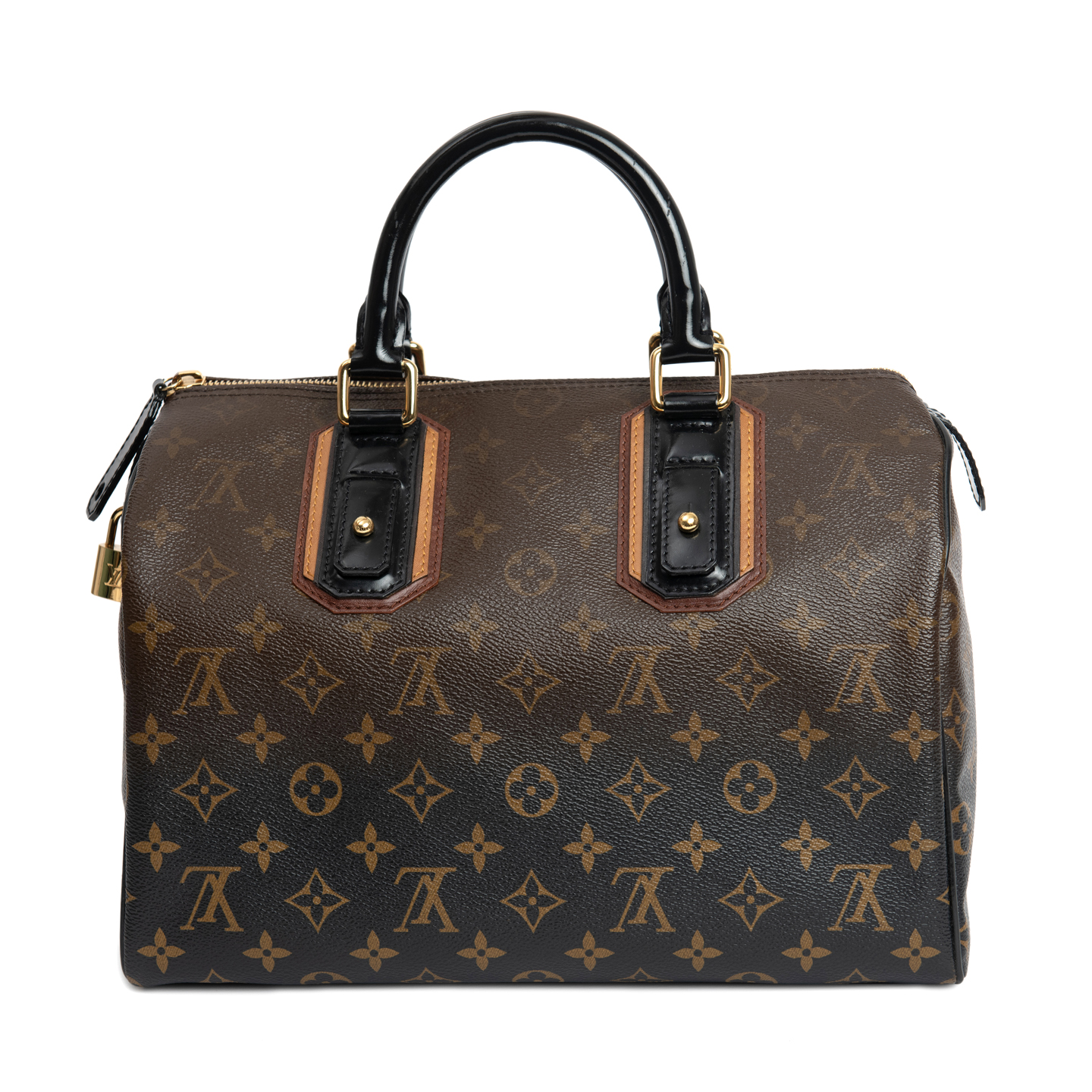
If you’ve ever scrolled through Chrono24 or Sotheby’s and felt a physical pang of annoyance at the markups, you’re not alone. Most people think high fashion is just about leather and logos. It isn't. It’s about the math of scarcity. When a limited Louis Vuitton edition hits the shelves, or more accurately, the private VIP WhatsApp groups, the game changes. You aren't just buying a bag. You’re buying a piece of art history that, frankly, has better ROI than half the stocks on the NYSE right now.
Take the 2017 Supreme collaboration. People literally camped out for days. It was chaotic. Even now, a red Christopher backpack from that drop can fetch $15,000 to $20,000 depending on the condition. That’s absurd for a nylon and leather bag, but that is the power of the "limited" tag.
The Virgil Abloh Effect and Why It Changed Everything
Virgil Abloh didn't just design clothes; he disrupted the entire logic of what a limited Louis Vuitton edition should be. Before him, "limited" usually meant a different color of the Speedy or maybe a subtle artist monogram. Virgil brought in "The 1.1 Millionaires" sunglasses and the iridescent Keepalls that looked like they were made of liquid gasoline.
He understood that the modern collector doesn't want "classy." They want "conspicuous."
Look at the "Keepall Bandoulière 50" from his debut Spring/Summer 2019 collection. It was transparent, PVC, and had a massive plastic chain. Traditionalists hated it. Collectors lost their minds. Today, those pieces are staples in the archives of serious fashion museums and the closets of guys like P. J. Tucker.
The strategy was simple: create something that looks like it shouldn't exist. When you pair the heritage of a 170-year-old French house with the aesthetic of a construction site or an 8-bit video game, you create a friction that drives value. Honestly, it’s genius.
The Artists Who Made the Monogram Weird
Louis Vuitton’s greatest strength is their willingness to let outsiders mess with their DNA. This started way before the hypebeast era.
Back in 2001, Marc Jacobs invited Stephen Sprouse to literally spray paint over the monogram. It was punk. It was messy. It was the first time a limited Louis Vuitton edition felt like it was breaking the rules. If you find an original Graffiti Speedy in good condition today, you're looking at a significant investment piece.
Then came Takashi Murakami.
The Multicolore collection—those white or black bags with the 33 different colors in the monogram—defined the early 2000s. Paris Hilton had them. Every "It Girl" had them. For a long time, they were considered "dated," but we’re seeing a massive resurgence in the secondary market. Gen Z is obsessed with the Y2K aesthetic, and Murakami’s work is the holy grail of that movement.
- The Cherry Blossom collection (2003) remains one of the most faked bags in history because the demand never actually died.
- The Monogramouflage (2008) collection showed that LV could do "street" before street was cool.
- Jeff Koons’ "Masters" series took actual Da Vinci and Van Gogh paintings and put them on bags. Some thought it was tacky; others saw it as the ultimate meta-commentary on luxury.
How to Spot a Future Classic (And Avoid the Duds)
Not every limited Louis Vuitton edition is a winner. Some of them just... sit there. To know what’s going to hold value, you have to look at the "Three C’s": Context, Collaboration, and Craft.
If the collaboration is with a niche artist that only 50 people in Brooklyn know, the resale might be slow. But if it's someone like Yayoi Kusama—who just had her second massive rollout with the brand—the value is almost guaranteed. Her "Infinity Dots" are iconic. They are recognizable from 50 yards away. That’s what you want.
You also have to watch the materials. Leather pieces almost always age better than canvas or PVC. While the PVC Keepalls are cool, they can yellow over time if not stored in a climate-controlled environment. An exotic leather limited Louis Vuitton edition, like a Capucines in ombré lizard or matte crocodile, is a different beast entirely. Those are "legacy" pieces.
The Real Cost of "Limited"
Let’s talk numbers. A standard Neverfull might run you roughly $2,000. A limited version, say from the "By The Pool" collection or a specific artist collab, might start at $3,200. On the resale market, that $1,200 premium can double or triple the moment the boutique sells out.
But there’s a catch.
Condition is everything. I've seen people buy a limited Louis Vuitton edition and actually use it. Which is fine! It’s a bag. But if you’re looking at it as an asset, every scratch on the vachetta leather is a hundred-dollar bill flying out the window.
The Mystery of the "Hard Sided" Collectibles
Most people focus on bags. They're missing the real money: the trunks.
Louis Vuitton started as a trunk maker, and their limited-run hard-sided pieces are the peak of the pyramid. During the FIFA World Cup, they made a trophy travel case. For the League of Legends championship, they made a glowing, high-tech trunk. These aren't just luggage; they are furniture.
I recently spoke with a collector who spent six figures on a Malle Pyramide—a stack of trunks that fits together. It was a limited Louis Vuitton edition specifically designed for watch collectors. It has winders built into the drawers. Is it practical? Sorta. Is it a better investment than a condo in some cities? Surprisingly, yes.
Why the Secondary Market is the Real Boss
The truth is, Louis Vuitton controls the supply, but the secondary market (sites like Fashionphile, The RealReal, or Rebag) controls the narrative.
When a limited Louis Vuitton edition stops being produced, the "buy it now" price on these platforms becomes the new MSRP. It creates this frantic FOMO. You see a bag you liked three years ago, and suddenly it's 40% more expensive than it was at retail.
This is why "The Drop" model works so well. It’s not about the leather. It’s about the adrenaline of getting something that your neighbor can’t get, even if they have the money.
The "No-No" List for Collectors
If you're hunting for these pieces, avoid anything that feels too "gimmicky" without a big name attached.
- Seasonal prints that don't involve a collaborator usually don't appreciate as much.
- Be wary of "Limited Edition" tags that aren't actually numbered or restricted.
- Check the hardware. In recent years, some limited runs have used plastic-coated hardware that doesn't hold up as well as the classic brass or ruthenium.
How to Actually Get Your Hands on One
You can't just walk into the Fifth Avenue store and ask for the rarest limited Louis Vuitton edition in the back. It doesn't work like that.
You need a relationship. This means a history with a specific Sales Associate (SA). They have "books" of clients they call before a collection even hits the floor. If you want the Louis Vuitton x Nike Air Force 1s (the ones Virgil designed), you basically had to be on a pre-approved list of VVICs (Very Very Important Clients).
But for us mere mortals, the strategy is different.
First, watch the runway shows. Not for the clothes, but for the accessories. When you see a bag that looks "weird," that's your target. Call your local boutique the next day. Ask for the "Product Code." Put your name on the interest list. Don't wait for the launch date. By the launch date, the "limited" stuff is already spoken for.
Second, don't sleep on the "Personalization" services. Sometimes LV does limited-run patches or hand-painting events. These aren't technically "collabs," but they make your piece a one-of-one, which is the ultimate version of limited.
The Future: Digital Assets and Physical Reality
We're moving into a weird space where a limited Louis Vuitton edition might not even be physical. They’ve already experimented with NFTs (the "Treasure Trunks"). For $39,000, you got a digital trunk that granted you access to future physical products.
It sounds like sci-fi, but it’s just the next logical step in exclusivity.
Whether it's a digital token or a leather bag hand-painted by a Japanese master, the core truth remains: Louis Vuitton knows how to manufacture desire. They take something common—a bag—and turn it into a relic.
If you're looking to start a collection, start small. Look for the "Pochette Accessoires" from limited runs. They’re relatively affordable, they hold their shape, and they are always in demand. From there, move into the bigger pieces.
Actionable Steps for the Aspiring Collector
- Audit the Resale Data: Before buying, check the "Sold" listings on eBay or Sotheby's for previous collaborations. If a 2022 collab is selling for under retail, the 2026 one probably will too.
- Verify the Date Code: Even limited editions have authentication markers (though newer bags use microchips). Learn how to read them.
- Storage is Non-Negotiable: If you buy a limited piece, keep the dust bag, the box, and the ribbon. "Full Set" pieces sell for 15-20% more than "bag only" listings.
- Focus on the "Firsts": The first collection of a new Creative Director is always more valuable than the middle ones. Pharrell Williams’ first "Millionaire Speedy" in crocodile leather is a prime example of a "First" that will be a historical marker.
The world of luxury is shifting. It’s less about "quiet luxury" and more about "documented rarity." Owning a limited Louis Vuitton edition is like owning a share of the brand’s cultural relevance. Just make sure you’re buying because you love the piece, not just the potential profit. Because at the end of the day, it's still a bag—even if it's a bag that could pay for a luxury car in five years.