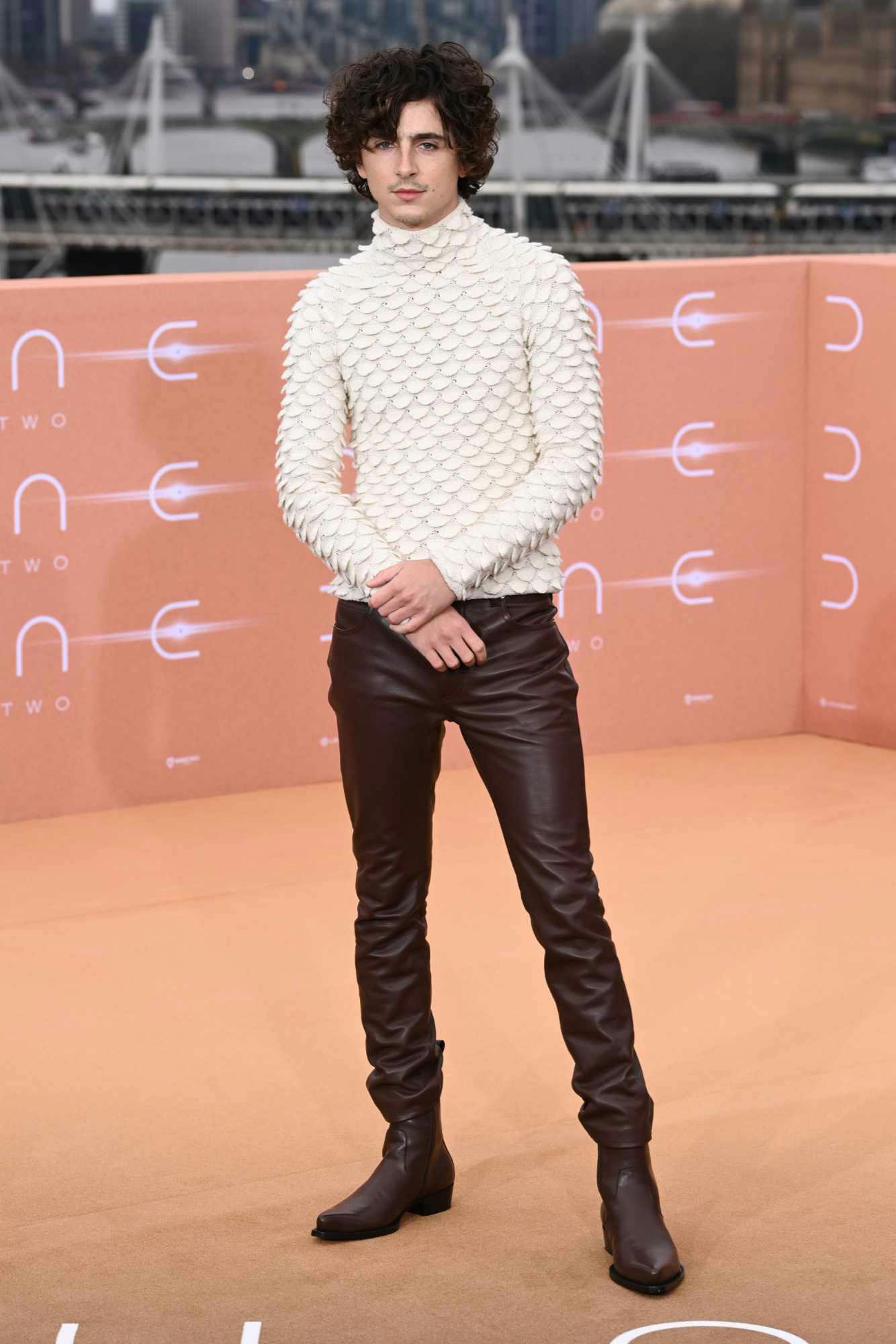
If you’ve spent any time on the internet in the last few years, you’ve seen the discourse. It’s unavoidable. Whether it’s a high-fashion red carpet look or a still from Dune, people cannot stop talking about the Timothée Chalamet skinny aesthetic. It’s become a cultural touchstone.
But here’s the thing: his physique isn't just a "look." It’s actually a career-defining characteristic that almost kept him out of Hollywood entirely. Seriously.
Early in his career, Chalamet was essentially told he didn't have the "right" body for the industry. He recently opened up about how his agents would get the same feedback constantly. "Oh, you don't have the right body," casting directors would say. They wanted the Chris Hemsworths. They wanted the buff, action-hero archetypes that dominated the 2010s.
Chalamet tried to change. He’s been honest about the fact that he actually tried to put on weight early on and simply couldn't. His metabolism—and likely his genetics—just wouldn't cooperate with the traditional "bulk up" Hollywood mandate.
The Rejection That Built a Movie Star
It’s wild to think about now, but Timothée Chalamet lost out on major franchise roles because of his weight. He specifically auditioned for The Maze Runner and Divergent.
He didn't get them.
Why? Because back then, "leading man" meant "muscular man." His agent even called him to say they were going to stop submitting him for those huge blockbuster projects because he wasn't putting on the mass required.
Instead of forcing a transformation that wouldn't stick, Chalamet leaned into his natural frame. He pivoted to "humble doors"—indie films like Call Me By Your Name and Lady Bird.
This choice changed everything. By embracing his lean, lanky build, he became the face of a new kind of masculinity. It wasn't about being the biggest guy in the room; it was about being the most vulnerable.
The Weight of the Roles: Transformation vs. Natural Build
While he's naturally thin, Chalamet has manipulated his weight for specific roles, but not in the way you might think. Most actors go to the gym to get huge. Chalamet often goes the other way or makes subtle shifts for historical accuracy.
- Beautiful Boy (2018): To play Nic Sheff, a young man struggling with meth addiction, Chalamet lost roughly 18 pounds. For a guy who is already lean, that’s a massive amount. He described the process as eating "protein goo" to hollow out his cheeks.
- Wonka (2023): On the set of Wonka, director Paul King marveled at how Chalamet stayed slim despite the constant presence of chocolate. King joked that it was a "miracle" and even said he was "trying to fatten him up" with the treats.
- A Complete Unknown (2025): Interestingly, for the Bob Dylan biopic, Chalamet actually put on 20 pounds. He told NPR that he realized he was actually thinner than the real Bob Dylan was at that time. He had to bulk up just to reach "normal" musician weight.
The Timothée Chalamet skinny conversation often misses this nuance. He isn't just "not working out." He’s incredibly disciplined about how his body reflects the characters he plays.
A Shift in the "Ideal" Body Type
Why does the public care so much? Basically, Chalamet represents a safety and approachability that the "alpha" archetype doesn't.
Sociologists and fashion experts often point to him as the leader of the "Skinny Babyface" archetype. In a world where young men are increasingly pressured by "looksmaxxing" and gym culture, Chalamet is a high-profile example of someone who is successful, romanticized, and powerful without having a six-pack.
He’s 5'10" and famously lanky. That hasn't stopped him from becoming a global fashion icon.
He wears backless halters and glittery harnesses. He leans into the "elfin" look. By not hiding his frame under baggy clothes or trying to fake muscle with padding, he’s made his natural build his greatest asset.
What We Get Wrong About Thin Actors
There is a weird double standard here. Honestly, people feel very comfortable commenting on how thin an actor is in a way they wouldn't with someone who has "extra" weight.
Chalamet has dealt with "skinny shaming" from critics who think he’s too frail to be an action star. Yet, when Dune came out, he proved them wrong. Paul Atreides is supposed to be lean and wiry—the book describes him that way.
Key Lessons from the Chalamet Aesthetic
If you're looking at Chalamet's career as a blueprint for your own body image or style, here’s the reality of what works:
- Competence over physique. Chalamet isn't famous because he's thin; he's famous because he’s an incredible actor. His confidence comes from his craft, not his biceps.
- Tailoring is everything. He doesn't wear off-the-rack suits. He wears clothes that are cut specifically to flatter a lean frame, making the "skinny" look intentional and sharp rather than accidental.
- Accepting your "Type." He stopped trying to be the Maze Runner guy and started being the Timothée Chalamet guy. Once he accepted his natural build, the roles started following him.
Actionable Next Steps
If you're someone who naturally shares a similar build and wants to lean into this aesthetic, focus on structural integrity in your clothing. Opt for heavier fabrics like wool or corduroy that add a bit of "visual weight" without looking like you're drowning in fabric.
For those following his career, keep an eye on his upcoming role in Marty Supreme. He’s already making waves for a more "mature" look that shifts away from his earlier "nymph-like" persona. It seems even the "skinny legend" is evolving his image as he enters his 30s.
Focus on your strengths, refine your personal style, and stop trying to fit into a "leading man" mold that wasn't built for you. That's the real Chalamet method.