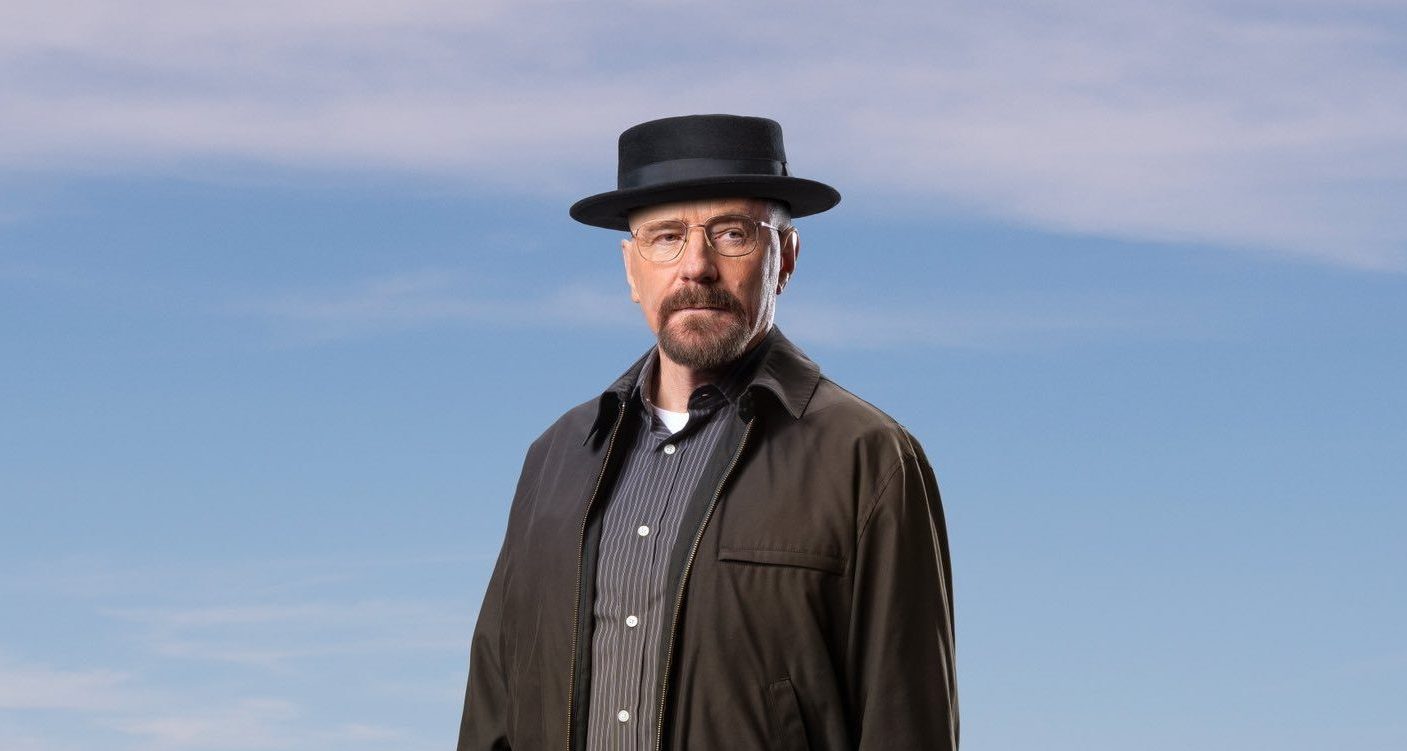
It starts with a pair of pants. They’re beige, pleated, and drifting through the desert air in slow motion before being crushed by a runaway RV. Then the camera pans. We see a man. He’s gasping for air, wearing nothing but a green button-down shirt and a pair of white briefs. He looks pathetic. Honestly, he looks like a loser.
This Walter White underwear scene is arguably the most important cold open in the history of the "Golden Age" of television. It wasn't just a gag. When Breaking Bad premiered on AMC in 2008, nobody knew what to make of it. Here was the dad from Malcolm in the Middle, standing in the middle of the New Mexico wilderness with a pistol tucked into the waistband of his underwear. It was jarring. It was weird. It was, quite literally, the foundation of the anti-hero movement that would dominate pop culture for the next decade.
The Raw Reality of the Tightie-Whities
Let’s talk about the choice of the underwear itself. It wasn't an accident. Bryan Cranston has been very vocal about why he pushed for those specific white briefs. The costume department originally suggested boxers or maybe something a bit more "cool" or flattering. Cranston said no.
He wanted the most "sad-sack" underwear possible.
The goal was to visually communicate exactly who Walter White was at the start of the series: a man who had completely given up on his own dignity. He was a high school chemistry teacher with a second job at a car wash. He was a man who had been bypassed by life. By wearing those specific briefs, Cranston signaled to the audience that Walt was vulnerable, exposed, and deeply uncool.
If he’d been wearing silk boxers or trendy briefs, the scene wouldn't have worked. It needed that specific brand of suburban "dad" patheticness to make the transformation into Heisenberg feel earned. You can't get to the black hat and the sunglasses without starting in the desert in your underwear.
Breaking the Sitcom Mold
Think about the context of 2008. Most people knew Bryan Cranston as Hal, the goofy, lovable father from Malcolm in the Middle. Seeing him in his underwear wasn't necessarily new—Hal was often in various states of undress for comedic effect.
But the Walter White underwear scene flipped the script.
Instead of being funny, it was claustrophobic. It was tense. The sound design—the heavy breathing, the wind whistling through the brush, the distant sirens—told us this wasn't a sitcom. This was a man at the end of his rope. Vince Gilligan, the show's creator, used that visual shorthand to instantly distance the audience from Cranston’s previous work. It was a "burn the boats" moment for the actor’s career.
Behind the Scenes in the New Mexico Desert
Filming that pilot wasn't exactly glamorous. The production was out in the Tohajiilee Indian Reservation, south of Albuquerque. It was hot, dusty, and uncomfortable.
The RV—a 1986 Fleetwood Bounder—was a character in itself. During the filming of the Walter White underwear scene, the crew had to deal with the logistics of making a man look terrifying while he was essentially half-naked. Cranston has recounted stories of standing out there in the sun, getting pelted with sand, just waiting for the lighting to be right.
- The gun was real (but unloaded).
- The gas mask was a functional piece of prop work.
- The pants falling from the sky? That took multiple takes with a "toss" from off-camera.
There’s a specific grit to the cinematography here. It’s grainy. It feels like a 70s Western, which is exactly what Gilligan was going for. He often called the show a "post-modern Western," and nothing says "lone gunman" like a guy standing his ground against the horizon, even if that guy happens to be in his 50s and missing his trousers.
The Symbolism of the Lack of Pants
In literature, losing one's clothes often symbolizes a "stripping away" of the social persona. Walt is literally stripped of his middle-class identity. He’s no longer Mr. White, the teacher. He’s a cornered animal.
When those pants fly off the RV, Walt’s connection to "normal" society goes with them. It’s the first time we see the duality of his character. He’s terrified, yes, but he’s also holding a gun. He’s ready to die, but he’s also ready to kill. That contrast is what kept people tuned in for five seasons.
Impact on Albuquerque Tourism
It sounds crazy, but that specific scene created a massive tourism boom in New Mexico. People still fly into ABQ just to find the spots where Walt stood.
The "underwear spot" in Tohajiilee is a bit harder to reach than the famous White house or the car wash, but die-hard fans make the trek. It’s become a pilgrimage site for television nerds. They want to stand where the RV crashed. They want to see the vastness of the desert that made Walt look so small.
Actually, the locals have a bit of a love-hate relationship with it. For years, people were throwing pizzas onto the roof of the real house used for the show. While nobody is throwing underwear into the desert (thankfully), the legacy of the Walter White underwear scene is etched into the cultural landscape of the city.
Why We Still Talk About It
Why does this scene rank so high in our collective memory? It’s because it was honest.
Television usually tries to make people look better than they are. Even "gritty" shows often have a layer of Hollywood polish. Breaking Bad refused to do that. It showed us the sagging skin, the knobby knees, and the cheap cotton fabric. It forced us to look at the reality of a mid-life crisis fueled by a terminal diagnosis and a desperate need for power.
Honestly, the scene is a masterclass in visual storytelling. You could watch the first five minutes of the pilot with the sound turned off and you would still understand exactly who Walter White is and the stakes of his situation. That’s the power of great costume design and a fearless performance.
Practical Lessons for Storytellers
If you're a writer or a filmmaker, there’s a lot to learn from the Walter White underwear scene. It’s about the "Power of the Image."
- Start with an enigma. Why is this man in his underwear? The audience has to know.
- Use contrast. A chemistry teacher (civilized) with a gas mask and a gun (violent) in the desert (wild).
- Physicality matters. Cranston didn't try to look "tough." He leaned into the awkwardness.
- The environment is a character. The New Mexico heat is palpable in that shot.
Conclusion: The Legacy of the Briefs
The Walter White underwear scene wasn't just a shock tactic. It was a declaration of intent. It told the world that Breaking Bad was going to be ugly, uncomfortable, and utterly human. It took a man we thought we knew and stripped him down to his most basic, desperate form.
Without those tightie-whities, Walter White might have just been another TV protagonist. With them, he became an icon. It’s a reminder that sometimes, the most powerful thing an actor can do is be willing to look a little bit ridiculous for the sake of the truth.
Next Steps for Fans and Researchers:
If you want to dig deeper into the production of this iconic moment, your next move should be to track down the Breaking Bad Insider Podcast. Specifically, listen to the episode covering the pilot. Vince Gilligan and the crew break down the exact logistics of the desert shoot, including the "pants drop" mechanics and the challenges of filming in a remote location.
Additionally, you can visit the Albuquerque Museum, which occasionally hosts exhibits on the film industry's impact on the region, featuring props and stories from the set. For those interested in the craft of acting, Bryan Cranston’s memoir, A Life in Parts, dedicates several chapters to his physical preparation for the role and his specific reasoning behind Walt's wardrobe choices. Exploring these primary sources will give you a much clearer picture of how a simple pair of underwear helped build a multi-million dollar media empire.