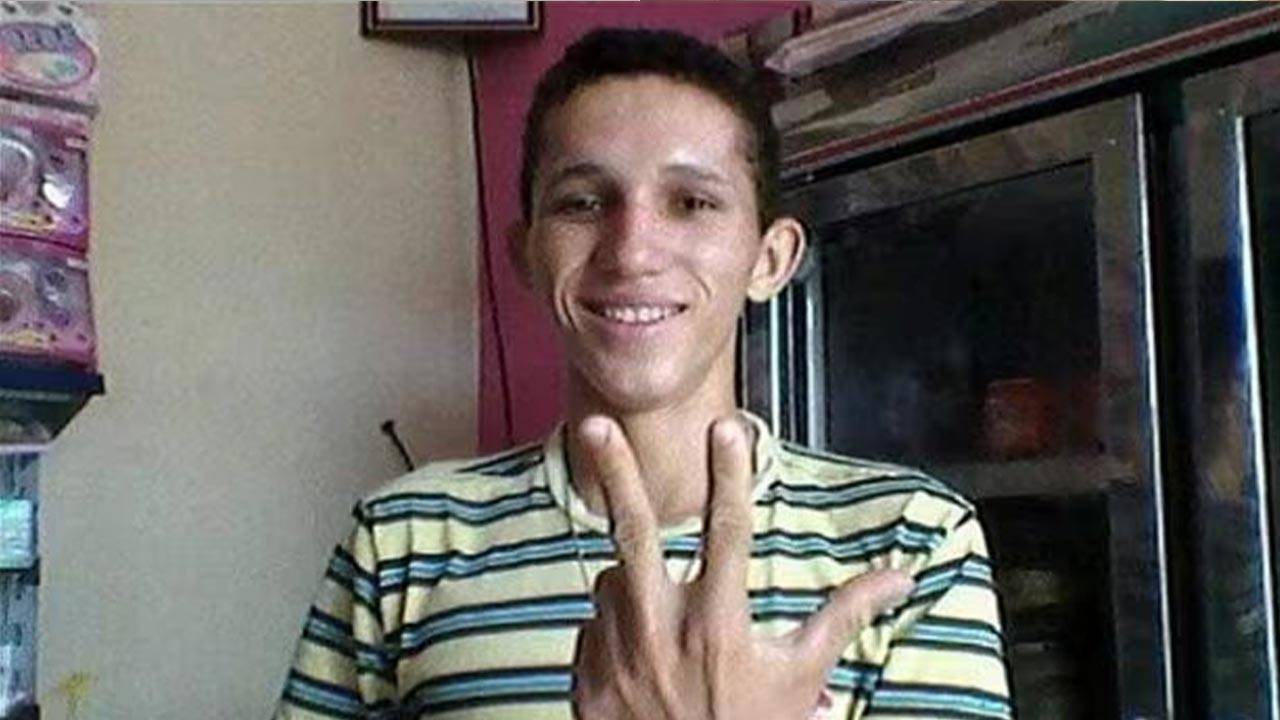
It sounds like a horror movie script. Honestly, if you read the headlines from 2013 without context, you’d think they were fake. But the story of Otávio Jordão da Silva Cantanhede is real. It’s a dark, messy, and deeply tragic piece of sports history that people still search for today because it feels so impossible.
Two men died over a game of soccer. That’s the basic version. The reality? It was a breakdown of human civility in a remote part of Brazil that left a community scarred and the world in shock.
The Match in Pio XII
The setting was Centro do Meio, a small rural area in the municipality of Pio XII, Maranhão. It wasn't some high-stakes professional league. This was a "pelada"—a pickup game.
Otávio Jordão da Silva Cantanhede was only 20 years old. He wasn't a career referee; he was just a local kid, an aspiring accountant who happened to be refereeing that day because of a foot injury. He couldn't run, so he blew the whistle.
Things got heated when Otávio red-carded a 31-year-old player named Josenir dos Santos Abreu. Josenir didn't want to leave. They started arguing. Then they started fighting.
A Split-Second Decision
What happened next is the part that defies logic. During the fistfight, Otávio pulled a knife from his pocket. He stabbed Josenir.
Josenir was rushed toward a hospital, but he didn't make it. He died on the way. When the news filtered back to the field, the atmosphere didn't just turn sour—it turned feral.
The Retaliation
You've probably heard the gruesome details. They are hard to stomach. Josenir’s friends and family, fueled by rage and reportedly alcohol, descended on the 20-year-old referee.
- They tied him up.
- They stoned him.
- They used a motorcycle to run over him.
- They eventually beheaded and quartered him.
The most infamous detail—the one that made international news—was that his head was placed on a stake in the middle of the pitch. It was a level of medieval violence that seemed completely disconnected from the year 2013.
Why This Case Still Haunts Brazil
At the time, Brazil was under a massive microscope. They were preparing to host the 2014 World Cup and the 2016 Olympics. The government was desperate to show the world that the country was safe. Then this happened.
It exposed a massive gap between the "official" Brazil of shiny stadiums and the rural Brazil where police presence is thin and "frontier justice" still exists. Police Chief Valter Costa famously said, "One crime will never justify another." It was a plea for law in a moment where law had completely vanished.
The Suspects and the Investigation
Police didn't have to look hard for evidence. People had recorded the lynching on their cell phones.
- Luiz Moraes de Souza (27) was the first arrested. He admitted to hitting the referee but denied the killing.
- Francisco Edson Moraes de Souza and Josimar Vieira de Souza were also sought by authorities.
Basically, the very technology that usually captures "the beautiful game" was used to document a massacre.
The Misconceptions
A lot of people think this was a professional match. It wasn't. There was no security, no official oversight, and no stadium. It was a dirt field in a poor neighborhood.
People also wonder why Otávio had a knife. According to reports from The New York Times and local witnesses, he often carried it for protection. In that environment, a 20-year-old riding his bike through remote areas felt he needed it. It turned out to be the catalyst for his own demise.
Lessons for Grassroots Sports
The tragedy of Otávio Jordão da Silva Cantanhede is an extreme outlier, but it highlights the volatility of unsanctioned sports. When there is no official structure, ego and local feuds can spiral.
If you're involved in local amateur leagues, the takeaways are stark:
- Neutrality is Key: Referees should never be local friends or rivals of the players.
- Security Matters: Even informal games need a "cool down" protocol or a designated person to de-escalate.
- Zero Tolerance: The moment a physical altercation starts, the game must end.
If you are researching this case for a project or out of curiosity, it’s worth looking at the sociological studies on "lynch mob mentality" in Brazil. It provides a much-needed layer of context to an event that otherwise feels like pure madness.
Stay informed by checking official police archives from the Maranhão State Police if you need specific trial outcomes or legal filings from that era.