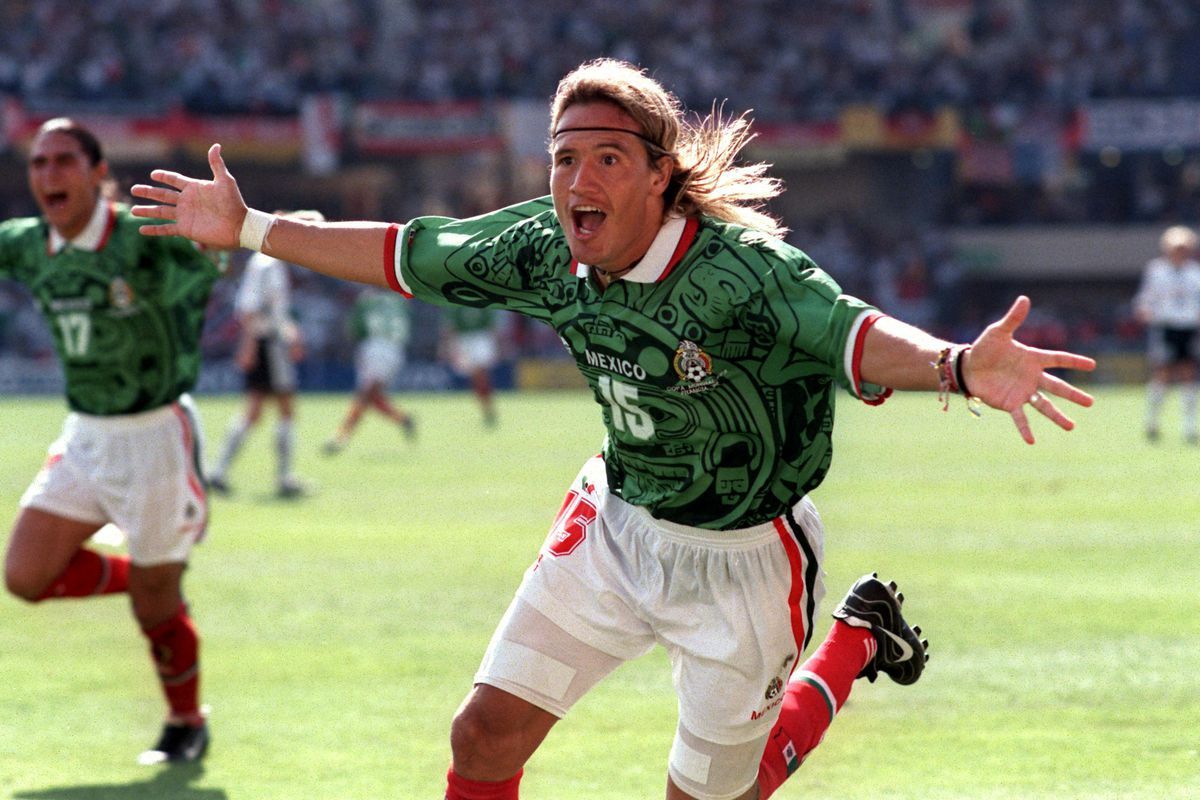
If you were watching soccer in the late 90s, you couldn’t miss him. The long, peroxide-blonde hair flowing behind him like a superhero cape. That signature "Matador" celebration where he’d look like he was finishing off a bull in the ring. Luis Hernandez El Matador wasn't just another striker for Mexico; he was a cultural reset for El Tri. Honestly, he’s probably one of the most electric players North America has ever produced, even if people today mostly know him as "that funny guy on TikTok."
But before the viral videos, there was 1998. France.
The Summer Luis Hernandez El Matador Conquered the World
France ‘98 was where the legend truly became immortal. You’ve gotta remember that back then, Mexico wasn’t expected to do much on European soil. They had never won a World Cup game in Europe. Ever.
Then came the opening match against South Korea. Mexico was down 1-0. Things looked bleak. Suddenly, Hernandez finds another gear. He nets two goals in the final 15 minutes. 3-1 win. The momentum was real. But it was the game against the Netherlands that cemented him as a god in Mexico City.
Stoppage time. Mexico trailing 2-1. A long ball floated into the box, and Hernandez basically threw his entire body at it. He poked it past Edwin van der Sar—one of the best keepers in history—and sent a whole nation into a frenzy. That goal secured their spot in the Round of 16. He finished that tournament with four goals in four games.
To this day, he holds the record for the most World Cup goals by a Mexican player (tied with Javier "Chicharito" Hernandez, but Luis did it in way fewer matches). He was clinical. Fast. Relentless.
More Than Just a Flash in the Pan
A lot of people think he just showed up for the World Cup and dipped. Not true. Hernandez was a beast in the Mexican league, especially with Necaxa.
Between 1994 and 1998, he was the focal point of a team that won back-to-back league titles. He wasn’t just a poacher; he had this weird ability to beat defenders one-on-one in tight spaces. It’s why Boca Juniors came calling. Imagine being a Mexican player in 1997 and getting signed by the biggest club in Argentina to play alongside Diego Maradona.
It didn't quite work out in Buenos Aires—he only played a handful of games—but just the fact that he was there says everything about his peak value. He was the 1997-98 Mexican Player of the Year. He was the top scorer in the 1997 Copa América with six goals. The guy was simply inevitable for a three-year stretch.
The LA Galaxy Era and the "Matador" Identity
In 2000, Hernandez made the jump to MLS. This was a massive deal at the time. The LA Galaxy paid a fortune (relatively speaking for the era) to bring him to the Rose Bowl.
He didn't disappoint. He scored 15 goals in 40 games and helped them win the U.S. Open Cup in 2001. More importantly, he brought "El Matador" to the American mainstream. He was the first real "superstar" Mexican signing that actually lived up to the hype on the field while selling out stadiums.
You see, the nickname wasn't just a gimmick. He played with this sort of arrogant flair. He knew he was the fastest guy on the pitch, and he wasn't afraid to let the defenders know it.
Why We Are Still Talking About Him in 2026
Luis Hernandez El Matador has had a wild second act. Most retired athletes fade away or become grumpy commentators. Not Luis.
He basically reinvented himself as a digital entertainer. If you follow him on social media, you’ve seen him poking fun at himself, dressing up in costumes, and recreating his old goals with a self-deprecating twist. He’s relatable. He doesn't take the "legend" status too seriously, which makes the fans love him even more.
But don't let the funny videos fool you. His stats are legitimate:
- 35 international goals for Mexico in 86 caps.
- 9 goals in Copa América (a Mexican record).
- 4 goals in a single World Cup (1998).
- Multiple league titles with Necaxa and a U.S. Open Cup with the Galaxy.
He wasn't just a personality; he was a pioneer for Mexican players wanting to prove they could compete with the world's best.
Actionable Insights for Fans and Collectors
If you're looking to dive deeper into the history of Luis Hernandez El Matador, here is what you should do next:
- Watch the 1998 Netherlands vs. Mexico highlights: Specifically the final 10 minutes. It’s a masterclass in "clutch" performance.
- Check out his Boca Juniors stint: It’s a fascinating "what if" in soccer history. Seeing him in the blue and gold jersey is still a trip for most fans.
- Follow his verified social channels: He frequently posts behind-the-scenes stories from his playing days that you won't find in official biographies.
- Look for 1998 World Cup memorabilia: Because he was the breakout star of that tournament, his trading cards and jerseys from that era have become highly sought-after "grails" for Mexican soccer collectors.
Luis Hernandez remains the bridge between the old-school grit of Mexican soccer and the modern era of global stardom. Whether it's the hair or the goals, he's impossible to forget.