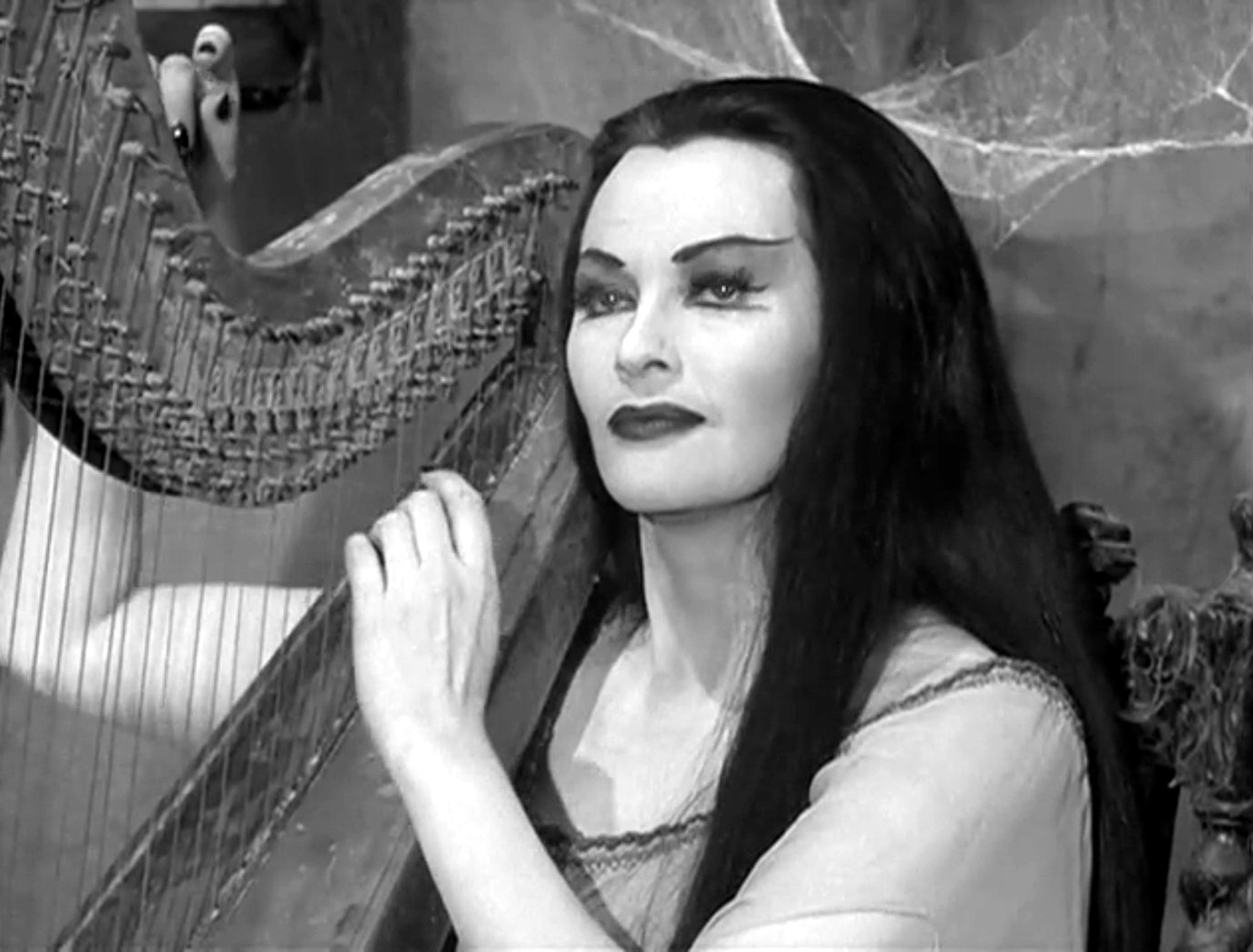
Most people remember the matriarch of 1313 Mockingbird Lane in grainy shades of gray. It’s how the show lived for seventy episodes. But if you grew up watching The Munsters in syndication, seeing Lily Munster in color for the first time was probably a total shock to the system. Suddenly, that ghostly, ethereal woman wasn't just white and black. She was vibrant. She was, frankly, a bit of a neon fever dream.
Honestly, the transition to color wasn't just a simple "flip of a switch" for the production. It changed how the character looked, how Yvonne De Carlo felt about her own face, and it sparked a decades-long debate among cosplayers about what color her dress actually was. Hint: It’s not just "pink."
The 1964 Color Pilot You Weren't Supposed to See
Before the show became the black-and-white staple we know, there was a 16-minute pitch film shot entirely in color. It was called "My Fair Munster." If you find it on a DVD extras menu today, you'll notice something immediately weird. Lily isn't played by Yvonne De Carlo.
The original actress was Joan Marshall, and she played a character named Phoebe, who looked much more like Morticia Addams. CBS executives thought she was a "lookalike" to the competition, so they scrapped the casting. They also realized that seeing the family in full, bright color made them look—well, like people in cheap costumes. The decision to go black and white for the series wasn't just artistic; it was a way to hide the "seams" of the makeup and pay homage to the classic Universal monster movies of the 1930s.
When De Carlo eventually took over as Lily, the makeup changed. In the black-and-white series, her skin was actually a pale green-blue shade. Why? Because on grayscale film, that specific hue of green translated into a perfect, "undead" porcelain white. If they had used actual white makeup, she would have looked like a glowing lightbulb on screen.
Munster, Go Home! and the Color Crisis
The real "Lily Munster in color" moment happened in 1966 with the feature film Munster, Go Home! This was the first time the general public saw the family in Technicolor. And Yvonne De Carlo wasn't a fan.
She later admitted in interviews that she found the color makeup "hideous." In the film, the makeup artists leaned hard into the greens and reds. Lily’s skin was a distinct, minty green, which clashed wildly with the bright red lipstick and the heavy purple contouring. Because the lighting for a 1960s color movie was so intense, the makeup had to be caked on. De Carlo felt it made her look "ugly," though most fans would disagree. There’s something undeniably iconic about that 1966 look, even if it lacked the soft, glam-horror glow of the TV show.
That Famous Dress: Fantasia Pink or Dusty Rose?
If you go to a Halloween store today, you’ll see Lily Munster costumes in "bubblegum pink." This drives hardcore collectors absolutely crazy.
The actual dress worn by Yvonne De Carlo was a custom-dyed shade often referred to by studio costumers as Fantasia Pink. It wasn't a flat color. It was a light, flowing chiffon over a heavier satin base. Depending on the light, it shifted between a soft lilac and a warm, dusty rose.
- The TV Version: Because it was filmed in black and white, the dress was chosen because the pink hue translated into a very specific shade of "ghostly" light gray that didn't blend into the background sets.
- The Movie Version: For Munster, Go Home!, the dress was more saturated to pop against the dark, moody interiors of the English manor where the movie takes place.
- The Cape: When Lily left the house, she wore a "coffin-lined" silver cape. In color, this was a shimmering, icy grey that looked almost lavender under the studio's tungsten lights.
Why the Makeup Looked Different in the 80s and 90s
By the time we got to The Munsters Today in the late 1980s or the TV movies in the 90s, the "Lily Munster in color" aesthetic had shifted. Makeup technology had improved. They didn't need to use thick, green greasepaint anymore to get the point across.
In these later versions, Lily often had a more "human" skin tone with just a hint of pallor. It lost some of that campy, 1960s "monster" charm. The 1966 film remains the gold standard for what the original character was "supposed" to look like in the real world, even if it was a bit jarring for the actors involved.
How to Get the Look Right
If you're looking to replicate the color version of Lily, don't just grab a green face paint stick. That’s the rookie mistake.
- Skin Base: You want a pale lavender or seafoam green primer, topped with a very light foundation. This creates a "glow from beneath" effect rather than looking like Shrek.
- The Eyes: Lily’s eyeshadow in the color film was surprisingly colorful—lots of purples and deep grays to create that sunken, "I haven't slept since 1764" look.
- The Lips: Go for a deep, blood-red or a brownish-burgundy. Avoid bright "cherry" reds, which weren't really her vibe.
- The Streak: That white streak in her black hair? In the color movie, it's a stark, bleached white, but some lighting makes it look slightly silver.
Basically, Lily Munster in color is a masterclass in 1960s "Glamour Ghoul" aesthetics. It was a bridge between the classic horror of the past and the bright, pop-culture future of the 70s. While the black-and-white episodes will always be the "correct" way to watch the show, the color versions give us a rare peek into the incredible detail the costume designers put into a show they knew most people would only see in shades of gray.
To really see the difference for yourself, try watching a clip from the 1964 color pilot side-by-side with a scene from Munster, Go Home! You’ll notice the 1964 version is much more "theatrical," while the 1966 film tries to make the monsters look like they actually belong in a colorful, modern world. It's a fascinating bit of TV history that still looks great today.
Check out the original 1966 film trailer if you want to see the specific "Fantasia Pink" dress in action under natural sunlight—it's the only way to settle the color debate for good.