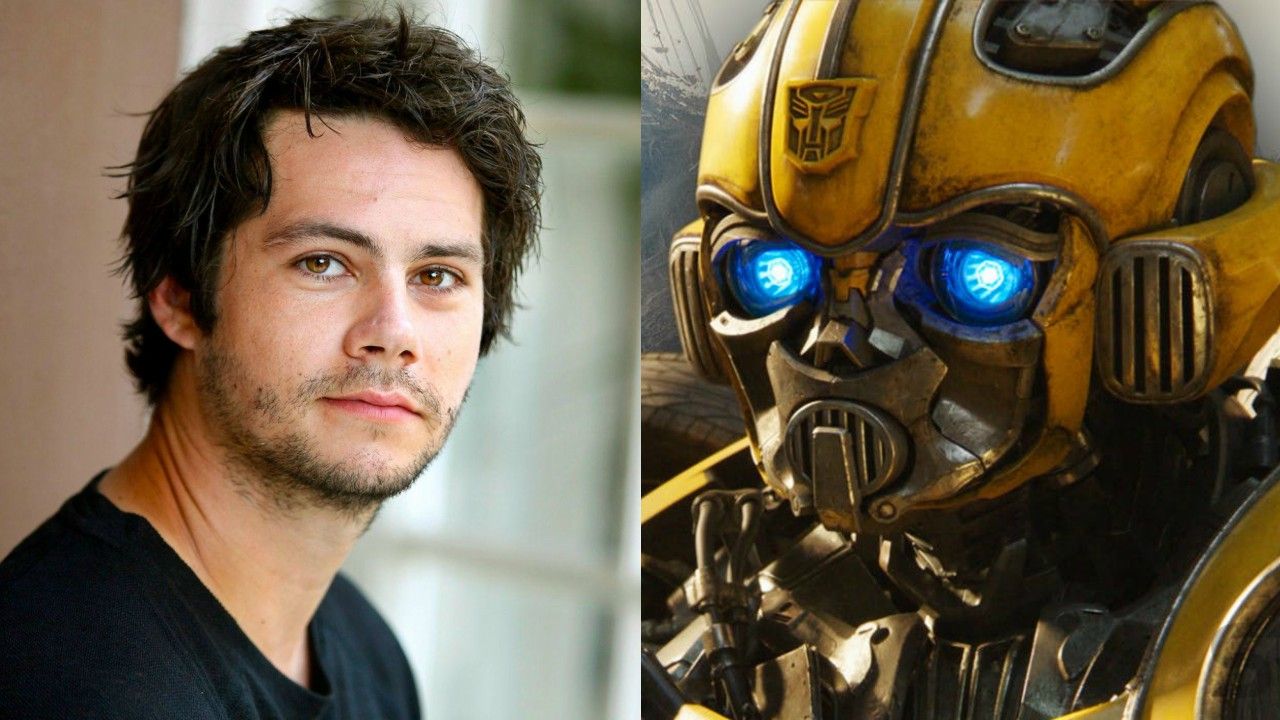
When the first trailers for the 2018 Bumblebee movie dropped, most of us expected the usual. You know the drill: explosions, a giant yellow robot being cute but silent, and maybe some radio-flipping jokes. But then the news broke just weeks before the premiere. Dylan O’Brien was voicing Bumblebee.
Wait, Bee talks?
It was a huge deal because, for over a decade, the live-action Autobot had been essentially mute. He was the "radio guy." Giving him a real, human voice felt like a massive risk for a franchise that was already struggling to find its footing after a few bloated sequels. Honestly, looking back from 2026, it remains one of the smartest casting moves in the entire Transformers history, even if it was criminally short-lived.
The Logic Behind Giving Bee a Voice
The decision wasn't just some random marketing gimmick. Producer Lorenzo di Bonaventura and director Travis Knight wanted to reset the vibe. They were moving away from the "Bayhem" and toward something more grounded and emotional.
Di Bonaventura famously said they were looking for two specific qualities: youthful exuberance and trustworthiness. If you've ever seen Teen Wolf or The Maze Runner, you know that’s basically Dylan O’Brien’s entire brand. He has this way of sounding like a kid who’s trying his best but is also slightly overwhelmed by the stakes. That’s Bumblebee in a nutshell.
Basically, they wanted us to feel the loss.
By letting us hear O'Brien's voice at the beginning of the film during the Cybertron sequences, the audience builds an immediate connection to B-127. He isn't just a machine; he’s a young soldier with a personality. When Blitzwing later rips out his vocal processors on Earth, it’s not just a plot point. It’s a tragedy. You actually feel the silence that follows because you know what was taken away.
Why Dylan O’Brien Specifically?
Casting a "big name" for what amounts to maybe five minutes of dialogue seems weird on paper. But voice acting isn't just about reading lines. It’s about texture.
Knight and the team at Laika (Knight’s home studio) are obsessed with character soul. O’Brien’s voice has a certain rasp and an earnestness that fits a 1980s coming-of-age story perfectly. He doesn't sound like a soldier; he sounds like a scout.
- Trustworthiness: You believe he’s a good guy from the first syllable.
- Vulnerability: He doesn't sound invincible, which makes the stakes higher.
- Contrast: His voice is a sharp departure from the deep, booming authority of Peter Cullen’s Optimus Prime.
Fans were skeptical at first. Some people wanted a return to the G1 voice (Dan Gilvezan), while others thought the radio-talk was too iconic to mess with. But once the movie hit theaters, the consensus shifted. Most people realized that O'Brien wasn't replacing the radio-talk—he was providing the "before" that made the "after" make sense.
The "Secret" Prequel Problem
There’s a bit of a nerd-war regarding where this movie fits in the timeline. For a long time, Paramount tried to pretend Bumblebee was a direct prequel to the 2007 Michael Bay film. But if you watch them back-to-back, it doesn't really add up.
In the 2007 movie, Bumblebee’s voice is supposedly "fixed" at the end by Ratchet, and he speaks a couple of lines (voiced by Mark Ryan). Then, in the sequels, he’s back to being mute again. It was a mess.
By casting Dylan O’Brien, the filmmakers were subtly signaling a reboot. This wasn't just a prequel; it was a new start. The "Knightverse," as fans call it, gave Bee a distinct identity that felt separate from the Camaro-driving brawler of the earlier films. O'Brien's performance helped bridge that gap, giving us a version of the character that felt more like the "little brother" of the Autobots.
What Happened in Transformers: Rise of the Beasts?
This is where things got a bit disappointing for O'Brien fans. When Rise of the Beasts came out in 2023, many expected Dylan to return for a few lines, especially since the movie was a direct follow-up to the 1987 setting.
Instead, Bee stayed largely silent, relying on his radio once more.
Then came Transformers One in 2024. This was an animated origin story set entirely on Cybertron. Logic would dictate that if you have a great voice actor who already played "Young Bee," you’d bring him back, right? Nope. They went with Keegan-Michael Key.
Now, Key did a great job—he brought a high-energy, comedic vibe to "B-127" (or Badassatron, as he called himself). But it left a segment of the fandom wondering why the "unified continuity" didn't include O’Brien. It felt like a missed opportunity to create a consistent vocal identity for the character across different media.
The Legacy of a Five-Minute Role
It’s rare for an actor to have such a lasting impact on a character with so little screen time. O'Brien’s performance is often compared to Vin Diesel as the Iron Giant or Groot. It’s about the feeling of the voice rather than the word count.
He captured the "optimistic soldier" vibe so well that even now, in 2026, when people talk about the "best" version of Bumblebee, his name comes up alongside the original 1984 cartoon. He made the character human—or as human as a giant alien robot can be.
If you’re a fan of the franchise or just a Dylan O'Brien completist, there are a few things you should actually do to appreciate this performance more:
- Watch the Cybertron opening with headphones. The sound design is incredible, and you can hear the nuances in O'Brien's delivery during the heat of battle.
- Compare the 2007 "fixed" voice to O'Brien's. You'll notice how much more "youthful" O'Brien sounds, which fundamentally changes how you view the character's maturity level.
- Check out the behind-the-scenes interviews. Seeing how Travis Knight and Dylan worked to find that "scout" tone gives you a lot of respect for the technical side of voice acting.
Dylan O’Brien might have only had a handful of lines, but he gave Bumblebee a soul that the franchise desperately needed. He wasn't just a yellow car that hit things; he was a character we finally got to know.