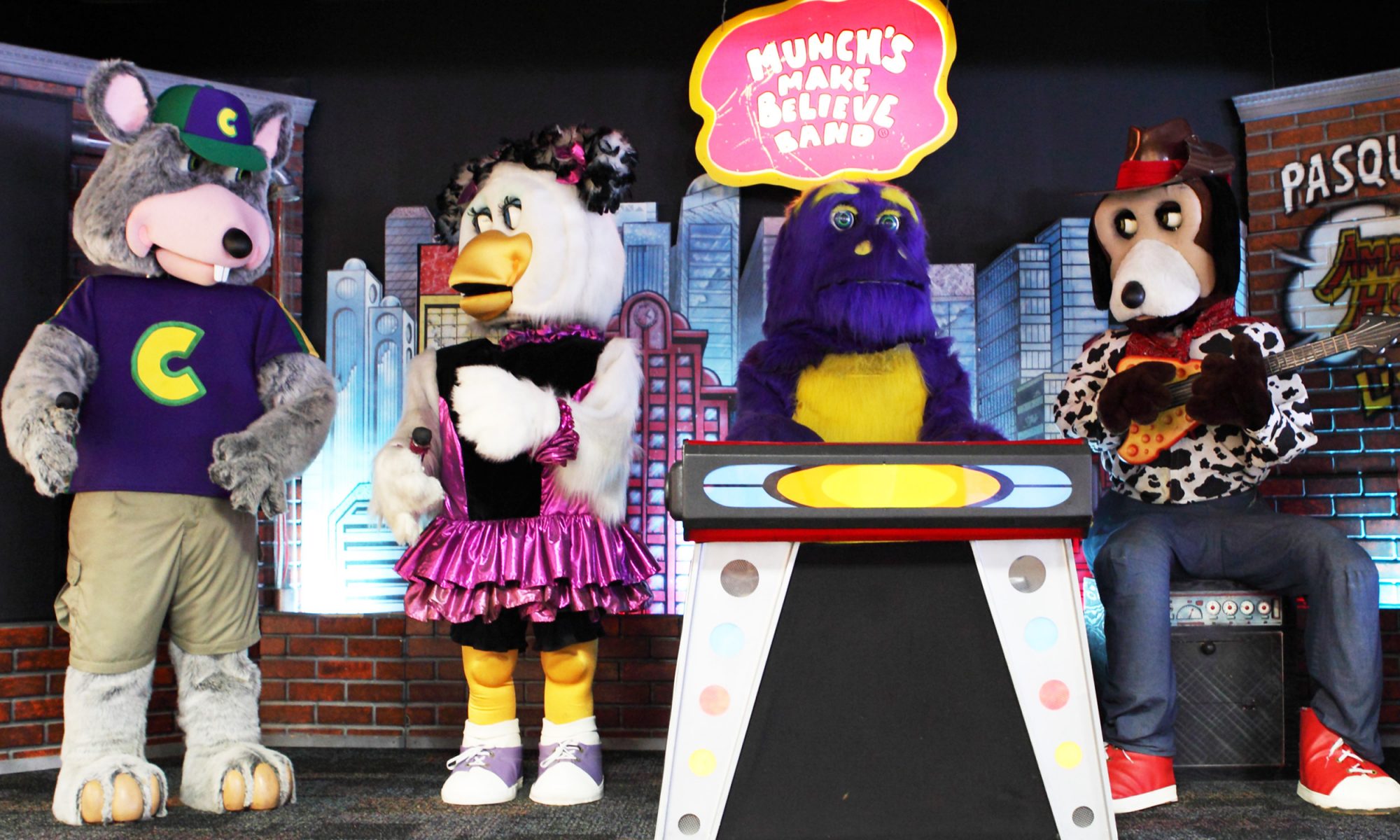
If you grew up in the eighties or nineties, you probably remember the smell of burnt pepperoni and the rhythmic thump-hiss of a robotic rat. It’s a core memory. But if you ever saw one of those characters without its skin—maybe during a maintenance check or a late-night repair—it was probably nightmare fuel.
Most people call that metal frame a chuck e cheese animatronics endoskeleton. In the industry, they usually just call it a "mech" or a frame. Honestly, though, "endoskeleton" fits perfectly. It’s the rigid, clanking bones that make the magic (or the trauma) happen.
The Metal Bone Structure
The guts of a Chuck E. Cheese bot aren't nearly as high-tech as modern fans might think. We aren't talking about Boston Dynamics here. Most of these mechs are built from heavy-duty welded aluminum or steel. Aluminum is the go-to because it’s light enough to move fast but strong enough to not snap when a pneumatic cylinder fires with the force of a small kick.
Basically, the skeleton is a series of metal plates, square tubing, and hinges. You’ve got a central "spine"—a thick vertical pole—and various pivot points for the shoulders, neck, and jaw.
If you look at the older Cyberamic models, which were the backbone of the Pizza Time Theatre era, they were surprisingly simple. They used basic rectangular bars for limbs. The "joints" were just bolts and bushings. It wasn't about being pretty; it was about surviving 12 hours of "Discovery Jam" every single day without the arm falling off into a kid's soda.
Pneumatics vs. Motors
One big misconception is that these things are full of gears and electric motors. They aren't. Not the classic ones, anyway.
Almost every movement in a standard Chuck E. Cheese character is powered by pneumatic cylinders. These are small metal tubes that use compressed air to push a piston in and out.
- The Hiss: That sound you hear? That’s the solenoid valves releasing air after a movement.
- The Jerkiness: Because air is compressible, pneumatics tend to be "snappy." It’s why Chuck's movements always felt a bit aggressive.
- The Hoses: A single bot like Chuck might have 32 or more movements. That means dozens of air lines—red, blue, and clear—snaking down through the floor like a plastic nervous system.
The Creative Engineering Connection
You can't talk about the skeleton without talking about Aaron Fechter. He’s the guy behind Creative Engineering and the creator of the Rock-afire Explosion.
When ShowBiz Pizza and Pizza Time Theatre merged, they did something called "Concept Unification." They took the incredibly advanced Rock-afire bots—the ones with the high-quality endoskeletons—and literally stripped their skins off. They put Chuck E. Cheese character costumes over the skeletons of characters like Rolfe DeWolfe and Dook LaRue.
This created the 3-Stage show. These endoskeletons were the "gold standard." They had better range of motion and used higher-quality materials like fiberglass plates to give the body its shape. If you ever felt like one Chuck E. Cheese looked "better" or moved more fluidly than another at a different location, you were probably looking at a repurposed Rock-afire mech.
Why They’re Disappearing (And What’s Left)
By 2026, the era of the mechanical band is basically over. CEC Entertainment decided to swap the bots for "Dance Floors" and LED screens. It's cheaper. It's easier to maintain. It doesn't require a technician who knows how to fix a leaking air valve at 10:00 PM on a Saturday.
Most of these endoskeletons were sadly scrapped. The company has a strict policy about destroying them so they don't end up on eBay or in some fan's basement looking "creepy." They usually crush the frames and slash the masks.
However, a few "Legacy" locations still exist.
- Pineville, NC: The flagship for nostalgia.
- Springfield, IL: Still rocking the full band.
- Hicksville, NY: Another survivor of the 2.0 remodel.
- Northridge, CA: The legendary Munch's Make Believe Band lives on here.
The Technical Reality
If you’re trying to understand how these things actually work, think of them as puppets. Instead of strings, you have air.
Each movement is triggered by a signal from a computer—originally running on specialized "Grey Box" controllers. The signal tells a valve to open. The air rushes into the cylinder. The piston extends. The metal arm moves.
The "face" of the endoskeleton is usually the most complex part. It has tiny cylinders for the eyelids, the jaw, and sometimes even a "head lean." The eyes are usually just plastic spheres with paper irises, held in place by more metal brackets. It's a miracle they looked as lifelike as they did, considering it was just a bunch of hardware store components and clever engineering.
Actionable Insights for Collectors and Tech Fans
If you're fascinated by the mechanical side of this history, here is how you can actually engage with it today:
- Visit the Legacy Locations: If you want to see a working endoskeleton (well, under the fur), go to Pineville or Northridge now. There's no guarantee they'll stay forever, even with the "permanent" status.
- Study the Mechs via Creative Engineering: Aaron Fechter still posts videos of his original mechs. Since the 3-Stage Chuck E. bots are Rock-afire mechs, his channel is the best place to see the raw metal skeletons in action.
- Look into Garner Holt: While the old bots were pneumatic, the newer "Studio C" Chuck E. (the one who stood alone on a circular stage) was built by Garner Holt Productions. These use different tech, sometimes involving more electric servos for smoother movement.
- Avoid "FNAF" Misinformation: A lot of the info online about "endoskeletons" comes from the Five Nights at Freddy's fandom. While fun, those designs are sci-fi. Real Chuck E. bots can't walk, they don't have "remnant," and they're mostly powered by a loud air compressor in the back room.
The chuck e cheese animatronics endoskeleton is a dying piece of Americana. It represents a weird overlap between the disco era, the rise of Silicon Valley, and the golden age of themed entertainment. Seeing one without its skin is a reminder of just how much work went into making a plastic rat sing about pizza.
Next Steps: You should check out the official Creative Engineering YouTube channel to see the original "Concept Unification" tapes. They show the literal process of taking the skin off the endoskeletons to convert them into Chuck E. characters. It's the best visual record of what these machines look like under the hood.