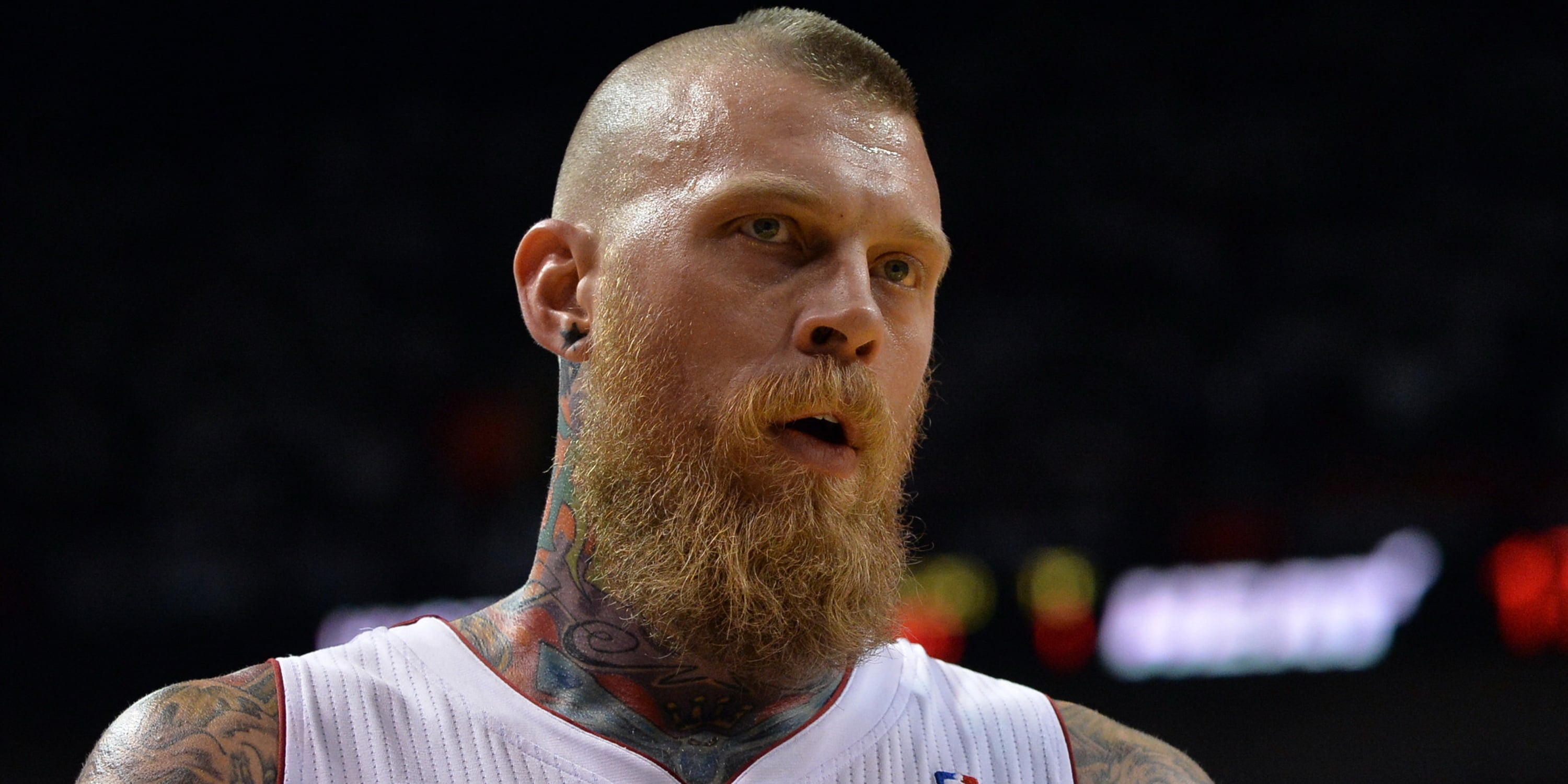
If you ever watched an NBA game in the mid-2010s, you couldn't miss him. The mohawk. The technicolor sleeve of tattoos crawling up his neck. That "Free Bird" ink staring you down while he swatted a ball into the third row. Chris Andersen, better known as "Birdman," was never the guy scoring thirty points a night, but he was the guy every championship team desperately needed.
Today, in 2026, people still wonder what happened to the man who went from undrafted rookie to Heat legend. Specifically, they want to know how much of that NBA cash he actually kept. Honestly, the world of retired athletes is usually a tragic tale of "bankrupt by 40," but Andersen’s story has some serious wings.
Chris Andersen Net Worth: The Real Breakdown
So, let's get into the nitty-gritty. As of early 2026, Chris Andersen net worth is estimated at approximately $14 million.
Now, if you look at his career earnings, that number might seem a little low. Over 15 seasons in the NBA, Birdman pulled in a cumulative $33,154,955 in salary alone. Why the gap? Well, life happens. Between taxes, agent fees (usually 3-4%), and the high-flying lifestyle of a guy who owns a massive compound in Colorado and once listed a Miami mansion for nearly $4 million, the burn rate is real.
But $14 million is nothing to sneeze at. He's actually managed his money better than a lot of his peers. While some guys blow it all on jewelry and bad investments, Andersen has always been a bit of a "low-key" outdoorsman when the cameras aren't rolling.
Where the Money Came From
Birdman’s financial journey wasn't a straight line. It was more like a roller coaster with no lap bar.
- The Early Grind: He started undrafted. He played in China. He played in the IBA. He was basically living on peanut butter and dreams before becoming the first-ever D-League player called up to the NBA by the Denver Nuggets in 2001. His first contract? A measly $288,171.
- The Big Denver Payday: After a two-year ban that nearly ended his career (and his bank account), he came back with a vengeance. In 2009, he signed a five-year, $21.2 million contract with the Nuggets. This was his peak "wealth-building" phase.
- The Amnesty Clause Twist: In 2012, Denver used the amnesty clause on him. This is weirdly great for a player's net worth. The Nuggets still had to pay him the remaining $9 million on his contract, but he was free to sign somewhere else.
- The Miami Heat Era: He joined LeBron and D-Wade in Miami for a veteran minimum of about $1.4 million. He won a ring. He became a cult hero. More importantly, his "Birdman" brand became a marketing machine, even if most of that didn't show up on a standard NBA contract.
The Miami Real Estate Win
You've gotta talk about the house. In 2013, right as he was helping the Heat win a championship, Andersen dropped $1.89 million on a massive 7,600-square-foot spread in Pinecrest, Florida.
He didn't just live there; he upgraded it. When he finally looked to move on in 2017, he originally listed it for $4.55 million. While real estate records show he eventually had to trim that price down closer to $4 million, he still walked away with a massive profit. Flipping luxury real estate in South Florida is one of the smartest things an athlete can do, and Birdman nailed the timing.
Life After the NBA: BIG3 and Beyond
When the NBA lights went out in 2017 after a stint with the Cleveland Cavaliers, Andersen didn't just sit on a porch. He joined Ice Cube’s BIG3 league.
He wasn't just playing for fun. In 2018, he led his team, Power, to a championship and was named the league’s Defensive Player of the Year. The BIG3 doesn't pay NBA money—salaries usually range from $10k to $50k per season plus bonuses—but it kept him in the public eye and fueled his "Birdman" persona for apparel and appearance fees.
He’s also been spotted doing a lot of catfishing (the actual fish, not the internet scam) in Colorado. It sounds like a cheap hobby, but high-end angling and the outdoor lifestyle he promotes have led to minor sponsorship deals with gear companies.
What People Get Wrong About His Finances
A lot of people assume the two-year drug suspension in 2006 broke him. It was a "drugs of abuse" violation that saw him kicked out of the league.
Honestly? It probably cost him about $5 million to $7 million in potential earnings during those prime years. But it didn't bankrupt him. Because he was reinstated and proved he was still a top-tier rim protector, he actually commanded more money upon his return because he was well-rested and motivated.
Also, don't confuse him with other people named Chris Andersen. If you search for the name, you'll see a CFO of a tech company and a director of a real estate firm. Those guys have different bank accounts. Our Birdman’s wealth is built on blocks, boards, and 15 years of being the most energetic guy in the room.
Actionable Insights for the "Birdman" Fan
If you're looking at Chris Andersen’s life as a blueprint, here is what you can actually take away:
- Diversification is key: He didn't just rely on his NBA salary; his real estate investment in Florida provided a massive safety net when he retired.
- Resilience pays: He is the only player to be expelled from the NBA and return to win a championship. That comeback story made him more marketable than if he had just been a steady, boring bench player.
- Know your brand: Andersen knew he wasn't a superstar. He leaned into the "Birdman" character, which made him a fan favorite in every city he played in, ensuring he stayed employed long past his physical prime.
Today, Andersen lives a relatively private life, likely split between Florida and Colorado. He’s not out there chasing clout on TikTok. He’s just a guy who worked a very specific, very tall job for 15 years and made sure he didn't blow the check.
To stay updated on retired athlete finances, keep an eye on property tax records in the Pinecrest area or follow BIG3 alumni news, as those often reveal the most accurate glimpses into their current lifestyle.