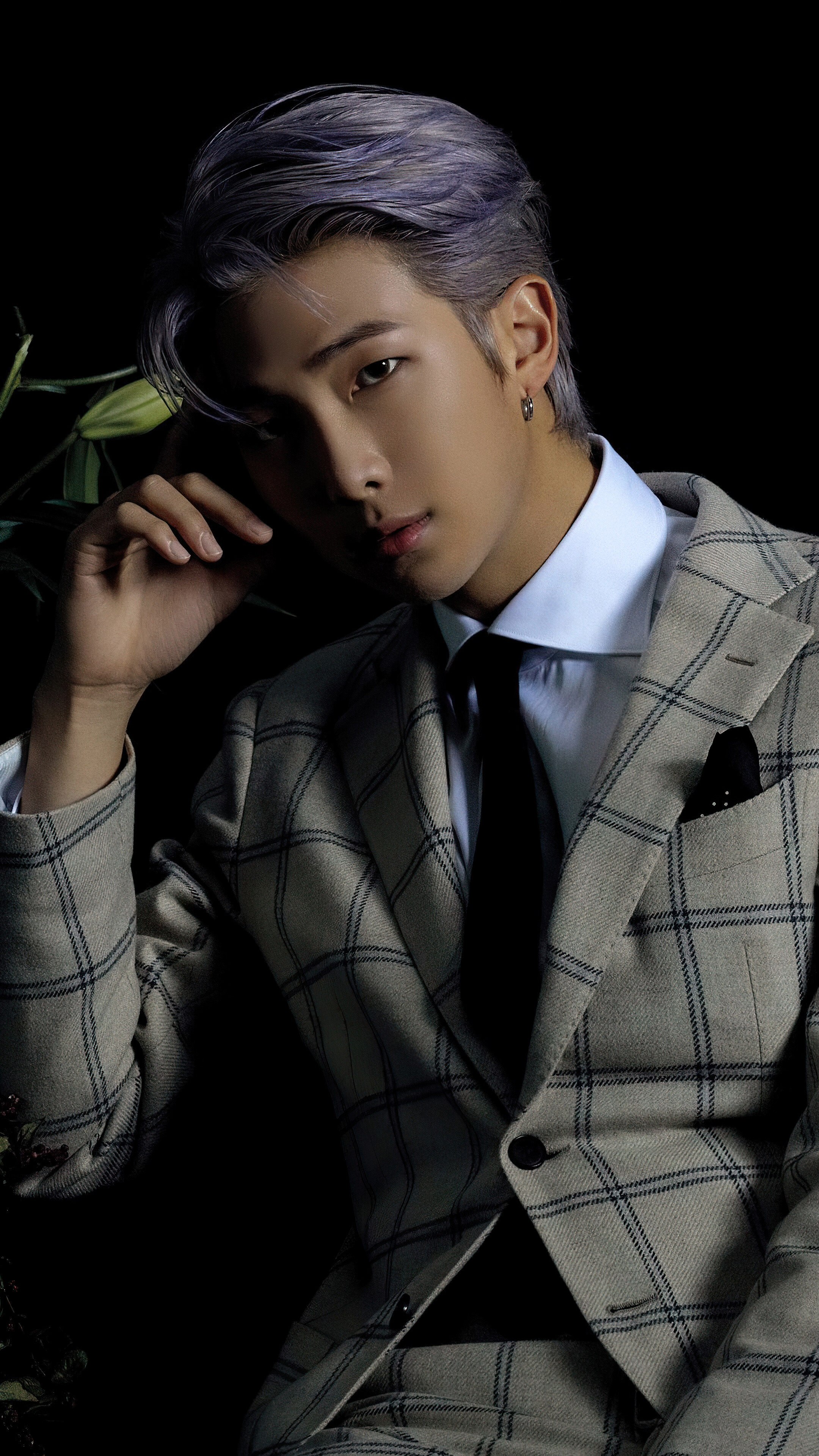
Kim Namjoon is a bit of a walking contradiction, or at least he used to be. You see him on stage as BTS RM, the leader of the biggest group on the planet, spitting fire in a stadium filled with 50,000 screaming people. But if you follow him on Instagram, you see a completely different guy. He’s "Namjooning." He’s riding a bike through a park, staring at a dusty ceramic jar in a quiet gallery, or reading a book by a river. It’s this weird, beautiful blend of global superstardom and quiet, intellectual curiosity that has changed how millions of people look at Korean culture.
People often ask why RM matters so much more than just being a rapper. It’s because he’s basically become the unofficial ambassador for the Korean art scene.
The "RM Effect" is a Real Thing
Museum directors literally track when he visits. It sounds like an exaggeration, but it’s not. When BTS RM posted a photo of himself at the Kwon Jin-kyu exhibition at the Seoul Museum of Art, the visitor count skyrocketed. It’s not just about fans wanting to take the same photo as him, though that’s part of it. It’s about the fact that he actually knows his stuff. He isn't just posing. He’s collecting.
He has pieces by Yun Hyong-keun, a master of the Dansaekhwa movement. He’s donated 100 million won multiple times to the National Museum of Modern and Contemporary Art (MMCA) to fund the reprinting of out-of-print art books. He wants kids to read about art. Think about that for a second. A world-famous rapper is spending his own money to make sure art history books stay in libraries.
Honestly, it’s kinda cool how he’s used his platform to bridge the gap between "idol culture" and "high art." Before RM, many younger fans might have found traditional Korean art stuffy or boring. Now? They’re lining up at galleries in Seoul, London, and New York.
Beyond the Leader Persona
Being the leader of BTS isn't just about giving speeches at the UN, although RM did that too, and he did it brilliantly. It's about the internal pressure of representing six other men and an entire country. He’s talked openly about the struggle of his identity—is he RM or is he Namjoon? This tension is all over his solo album, Indigo.
Indigo wasn't a typical pop record. It was an "archive" of his late twenties. He collaborated with Erykah Badu and Anderson .Paak, but the most telling track is "Yun," which features the late artist Yun Hyong-keun’s recorded voice. He’s literally talking to a dead painter through his music. That’s some deep, existential territory for a pop star to wade into.
The Military Service Era and the Future of BTS RM
Right now, things are a little different. As of 2026, we’ve seen the members of BTS navigate their mandatory military service in South Korea. RM enlisted in December 2023, and for a while, the "Namjooning" posts stopped. But the impact he left behind didn't fade. While he was away, his influence continued to ripple through the industry.
He didn't just disappear. He left us with Right Place, Wrong Person, an album that felt like a fever dream. It was weird, experimental, and totally unlike anything else in K-pop. It proved that he wasn't interested in just topping the Billboard Hot 100 anymore. He wanted to make something that felt real. Something that felt like him.
What Everyone Gets Wrong About His Leadership
Most people think being the leader of BTS means he’s the boss. In reality, it’s more like being a translator—not just of language, but of emotions. He’s the one who had to navigate the group's transition into the Western market while keeping their Korean roots intact. It was a massive burden. He’s mentioned in interviews that he felt like he was "representing a generation," which is a terrifying amount of weight for one person to carry.
But he does it with this sort of weary grace. He’s not afraid to look vulnerable. He’s not afraid to say he’s lost. And that’s why fans (ARMY) feel such a deep connection to him. He isn't a perfect idol; he’s a guy trying to figure out how to be a good person in a very loud world.
Why He’s Not Just "Another Rapper"
If you listen to his early mixtapes, like RM (2015), he was aggressive. He wanted to prove he was a "real" rapper. He was fighting the stigma of being an "idol rapper." But by the time he released mono. in 2018, that anger had melted into something more atmospheric and pensive.
- Lyrical Depth: He uses metaphors that require a literal degree to fully unpack.
- Multilingualism: He weaves English and Korean together so seamlessly it feels like a single language.
- Production Style: He’s moved away from heavy trap beats toward jazz, folk, and city-pop influences.
He’s influenced by writers like Haruki Murakami and Herman Hesse. You can see the traces of Demian all over BTS’s Wings era. He doesn't just read these books; he builds entire musical universes around them. It’s why his work feels so dense. You can’t just listen to an RM song once and "get" it. You have to live with it for a while.
The Art of Collecting
RM’s house looks like a curated museum. He’s got giant sculptures, minimalist paintings, and carefully placed ceramics. But he’s also said that he doesn't buy art as an investment. He buys it because he needs it to stay sane. He’s quoted saying that looking at a painting helps him feel like he’s not alone in his struggles. If an artist from 100 years ago felt the same pain he feels today, there’s a strange comfort in that.
Actionable Insights for the Namjoon-Curious
If you're just getting into RM's world or want to understand why your friends are obsessed with him, don't start with the BTS hits. Start with his solo work. It's the "raw" version of who he is.
1. Listen to 'mono.' on a rainy day. This playlist (he doesn't call it an album) is meant to be heard when you're feeling a bit lonely. It’s a hug in musical form.
2. Follow his art trail. If you ever visit Seoul, go to the MMCA or the Leeum Museum of Art. Look at the works of Yun Hyong-keun or Kim Whanki. You’ll start to see the visual language that inspires his lyrics.
3. Read the lyrics, don't just hear them. Use sites like Doolset Lyrics to get the deep-dive translations that explain the cultural context and wordplay he uses. The "Seoul/Soul" puns are just the tip of the iceberg.
4. Watch his UN speech from 2018. It’s the "Speak Yourself" moment. Even years later, it’s the definitive statement on his philosophy of self-love and identity.
Namjoon’s journey from a kid in Ilsan who loved hip-hop to a global art icon isn't just a success story. It’s a blueprint for how to grow up without losing your soul. He’s shown that you can be the most famous person in the room and still be the person who wants to sit in the corner and look at a rock for an hour. That’s the real magic of BTS RM. It isn't the fame; it’s the humanity.
To truly understand the current landscape of RM's influence, one must look at his post-military projects as they emerge. Keep an eye on his collaborations with independent Korean artists, as these often signal where the next big shift in the "K-Wave" is headed. Focusing on his transition from "Idol" to "Artist" provides the clearest picture of his long-term legacy in both the music and fine art worlds.